Cabbage as a working material
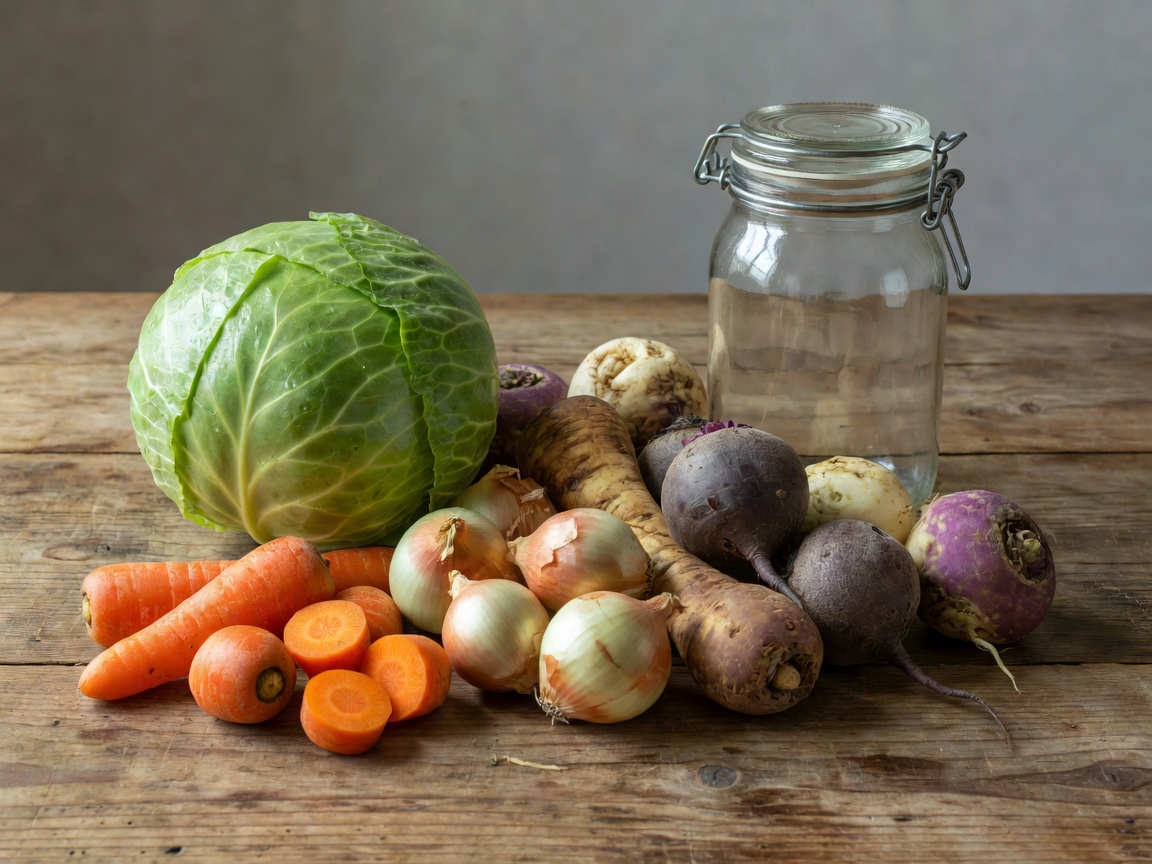
Cabbage is dense, adaptable and associated with many northern preservation cultures. Shredded cabbage can release liquid when handled with salt; whole leaves can serve as wrappers or layers. The useful lesson is not one fixed recipe but the relationship between cut, texture, salt, vessel and storage. Red cabbage, white cabbage and hardy winter varieties behave differently in a working kitchen.
Roots, cucumbers and onions
Carrots, turnips, swede, beetroot and radish bring different levels of water, sugar and firmness. Cucumbers are more delicate and can soften quickly if handled poorly. Onions contribute sharpness and aroma. Mixed batches can be visually compelling, but they complicate observation because ingredients change at different rates. A teaching session may compare single-ingredient vessels before combining them.
What salt-based fermentation means
Salt-based fermentation creates conditions in which selected microorganisms can develop while competing organisms are limited. Salt also draws water from plant tissue and influences crunch. This is a concept, not a safety guarantee. The result depends on the ingredient, cleanliness, concentration, temperature, oxygen exposure, vessel and storage conditions. Use current, established food-safety guidance and qualified instruction for operational decisions.
Seasonality and storage
Autumn cabbage and roots offer a different starting point from spring herbs or summer cucumbers. Seasonal planning affects availability, cost, flavour and the time available for observation. Storage is part of the design: a workshop should explain where a vessel will be kept, how it will be labelled and when it should be assessed. Refrigeration, shelf life and signs of spoilage require specific guidance rather than assumptions.
Regional comparison
Swedish and Danish food cultures provide familiar reference points for sour cabbage and pickled vegetables, while Finnish and Norwegian contexts add different relationships with roots, berries, grains and coastal food. Pickling may use vinegar, sugar or brine and should not automatically be called fermentation. Terminology matters when comparing traditions.
- Identify the ingredient and its season.
- Record vessel, salt approach and date without inventing safety conclusions.
- Notice aroma, texture and visible change separately.
- Use food-safety guidance before serving or storing.
Next route
For a practical session structure, read Nordic Fermentation Workshops. For dairy and grains, continue to Dairy & Grains. Plan a vegetable session