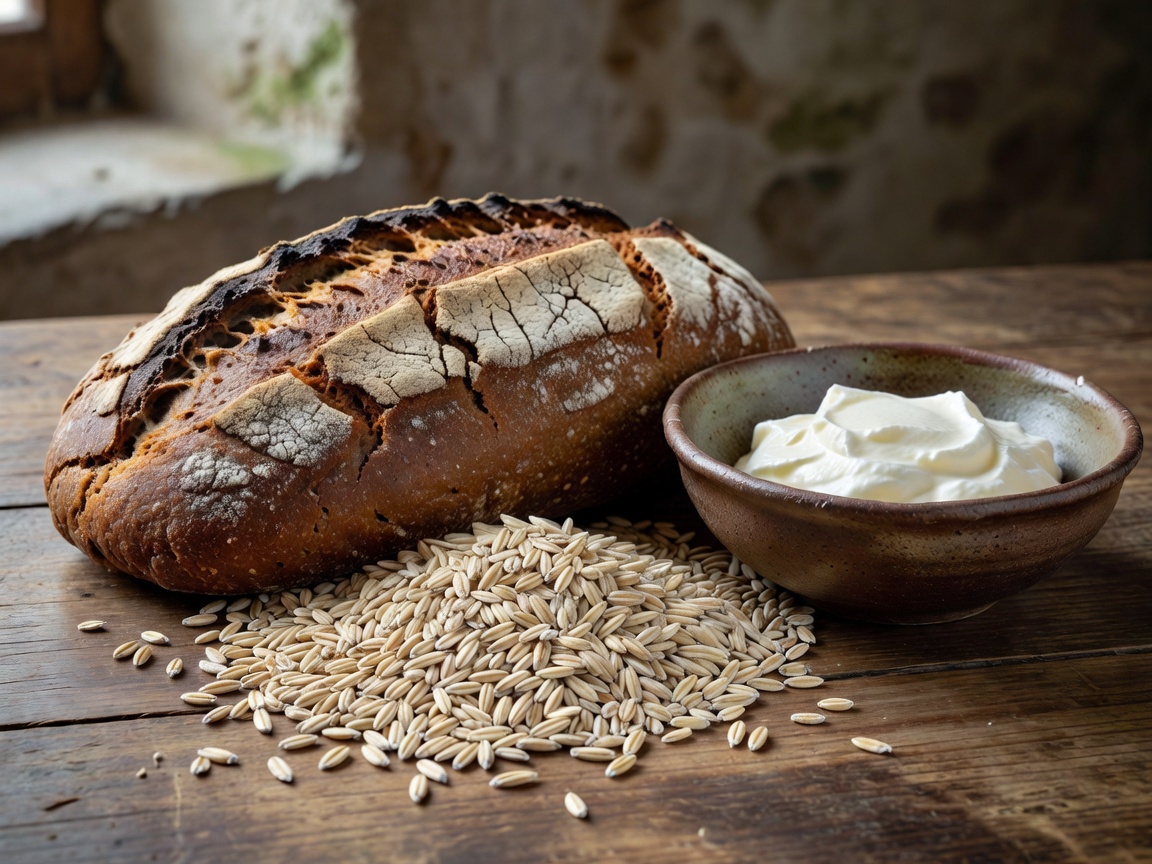
Cultured dairy has local language
Sour milk traditions appear in several Nordic food cultures, but names, cultures, fat levels and serving habits differ. A yoghurt-like product may be thick, pourable or gently acidic. “Culture” refers to microorganisms used to transform a food; it is not a guarantee that two products behave alike. Dairy also introduces allergy, refrigeration and handling considerations.
Rye carries a strong grain identity
Rye has an important place in northern baking because it performs well in cooler climates and produces breads with deep flavour. Sourdough is a method in which a living culture of flour and water helps acidify and leaven dough. The culture, flour, hydration, milling and fermentation environment all influence the result. A workshop should compare texture and aroma rather than promise one ideal loaf.
Barley and oats
Barley appears in porridges, breads, drinks and historic food practices. Oats bring softness, oil and a distinct cereal character. Their use varies by region and household. Fermented grain preparations can be explored through soaking, souring, starter-led dough or cultured batters, but each process has its own food-safety and recipe requirements. A broad educational overview should not substitute for a validated production method.
Regional differences
Swedish and Finnish sour milk vocabulary is not interchangeable, and Norwegian, Danish and Icelandic dairy traditions have their own histories. Rye baking has different forms across Denmark, Sweden, Finland and Norway. Coastal access, farm structure and household tools influence what becomes ordinary. Avoid presenting “Nordic” as a single national cuisine or treating a modern bakery technique as an unchanged historic practice.
Advantages and limitations
Fermentation can increase sensory complexity, soften grain structure and create useful acidity. It also introduces variability. Starters change, flour behaves differently and dairy requires careful control. The advantage of a workshop is comparative learning: participants can see how one variable affects texture. The limitation is that a short session cannot represent every regional practice or guarantee a repeatable result.
| Material | Observe | Plan for |
|---|---|---|
| Cultured dairy | Acidity, body, aroma | Allergens and cold storage |
| Rye | Crumb, acidity, density | Gluten and starter variability |
| Oats or barley | Texture and cereal flavour | Regional method differences |
Related study
Pair this guide with Scandinavian Fermentation Traditions or build a participatory session through Workshops. Discuss dairy or grain learning